
In this article
Key takeaways
- A damaged skin barrier is not working as effectively as it should, so skin can lose more water and feel dry, tight or reactive.
- Common causes include over-exfoliating, using too many strong actives at once, harsh cleansing, sun exposure and dry weather.
- To support recovery: simplify your routine, cleanse gently, moisturise, keep protecting your skin from the sun and reintroduce products slowly.
- Recovery time varies. If symptoms are severe, worsening or not clearly improving, see a dermatologist.
The basics
What Is a Damaged Skin Barrier?
A damaged or compromised skin barrier means the outermost protective layer of your skin is not functioning as effectively as it should.
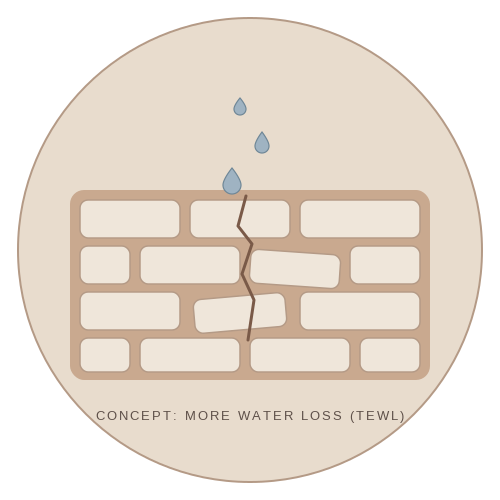
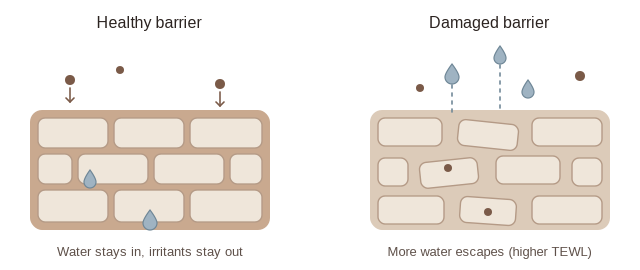
This may lead to increased transepidermal water loss (TEWL), the water that passes out through the skin and evaporates. That can make skin feel dry, tight or uncomfortable. It can also increase susceptibility to irritation and certain external substances.1
However, not every episode of dryness or sensitivity means the skin barrier is damaged. A dermatologist may need to assess persistent symptoms.
The brick-and-mortar barrier
Dermatologists often describe the skin barrier as a brick wall. The bricks are flattened skin cells called corneocytes. The mortar is made of intercellular lipids, mainly ceramides, cholesterol and free fatty acids. When this structure is disrupted, the barrier holds water less effectively.1
Skin barrier and skin microbiome
The skin barrier and skin microbiome influence each other. Changes in skin moisture, pH, surface lipids and inflammation can affect the environment in which microorganisms live. Similarly, some skin microorganisms interact with the skin's immune and protective functions.
However, a damaged skin barrier does not automatically mean that the microbiome is imbalanced, and microbiome changes cannot be diagnosed from symptoms alone. Learn more in our guide What Is the Skin Microbiome? Why It Matters and How to Keep It Balanced.
What to look for
7 Signs Your Skin Barrier May Be Damaged
These are possible signs of impaired barrier function, not a diagnostic checklist.2
Tightness after washing
Your face feels stretched or a size too small after cleansing. Healthy skin usually feels comfortable.
Stinging or burning
Products you have used for months suddenly sting, even a plain moisturiser or sunscreen.
Persistent dryness
Dryness that does not settle with your usual moisturiser, even in humid weather.
Flaking and rough texture
Dry flakes around the nose, mouth or eyebrows, and makeup that catches on rough patches.
Redness or uneven tone
Blotchy, warm-looking skin. On deeper skin tones, inflammation may appear darker, dusky or violaceous rather than bright red.
Cracks or tenderness
Small cracks at the corners of the nose or mouth, or skin that feels sore to touch.
Itching
Skin that itches, especially after washing or applying products.
These symptoms can also occur with conditions such as eczema, rosacea, allergic contact dermatitis and other skin disorders. If symptoms are persistent, severe or worsening, seek a dermatologist's assessment.
Dark marks or breakouts on their own do not confirm barrier damage. Have oily or acne-prone skin? See the FAQs below.
Why it happens
What Causes Skin Barrier Damage?
In clinic, the most common cause is doing too much, not too little.
| Cause | What happens |
|---|---|
| Over-exfoliating and too many actives | Over-exfoliating, using multiple strong active products together, or introducing them too quickly can irritate the skin and temporarily compromise barrier function. Ingredients such as retinoids, exfoliating acids and vitamin C are not inherently harmful to the barrier. Their effects depend on concentration, formulation, frequency of use and individual skin tolerance. |
| Harsh cleansing and hot water | Harsh cleansers and very hot water can leave skin feeling stripped. Healthy skin is mildly acidic,3 and the enzymes that build barrier lipids work best in these conditions.1 |
| Hard water | Research suggests that hard water may increase the deposition of certain cleansing surfactants on the skin, potentially contributing to irritation in susceptible individuals. However, the degree of irritation depends on the cleanser, washing conditions and individual skin characteristics. Hard water does not automatically damage everyone's skin barrier.4 |
| Sun | Excessive UV exposure can impair skin barrier function and contribute to inflammation and skin damage.5 |
| Dry air and cold weather | Low humidity and cold weather can increase dryness and influence skin barrier function, particularly in susceptible individuals or people with existing skin conditions.6 |
| Home remedies | Lemon juice is very acidic and baking soda is alkaline, and both can irritate. Citrus juice plus sun can also cause a burn-like reaction called phytophotodermatitis.7 |
| Procedures | Peels, lasers, waxing and threading can disrupt the barrier for a while, so follow the aftercare you were given. |
| Skin conditions | Changes in skin barrier function have been identified in several inflammatory skin conditions, including atopic dermatitis, psoriasis, rosacea and acne. However, their underlying mechanisms differ, and treatment must be tailored to the specific condition.2 |
If your routine seems to be irritating your skin, simplify it.
Myth
If it stings, it is working.
Fact
Stinging is not a sign of results. Some treatments cause mild, temporary irritation, but persistent burning or pain means stop and get advice.
What to do
How to Support Damaged Skin Barrier Recovery
Let your skin's comfort guide the pace, not the calendar.
First
Settle
- Simplify your routine to a gentle cleanser, a moisturiser and sunscreen.
- Pause irritating cosmetic actives. If cosmetic exfoliants or other active products are causing significant irritation, a temporary reduction or pause may be appropriate.
- Cleanse gently once or twice a day with lukewarm water, and pat dry.
- Moisturise twice a day. Slightly damp skin helps, but if that stings, apply to dry skin instead. Choose a richer cream for dry skin, or a light, non-comedogenic lotion or gel-cream for acne-prone skin.
- Keep protecting your skin from the sun (see below).
Then
Restart slowly
- Wait until your skin feels comfortable again, with no stinging, tightness or flaking.
- Bring back one product at a time, starting two or three times a week.
- Try each new product on a small area, such as along the jawline, for a few days first. This is a simple tolerance check, not the formal allergy patch test a dermatologist does.
- If stinging or redness returns, step back to the basics.
If you're using a prescription treatment for acne, eczema, rosacea, pigmentation or another condition, speak with your dermatologist before stopping or changing it. After a procedure, follow the specific aftercare your doctor gave you.
Keep protecting your skin from the sun
Continue protecting your skin from the sun. If your usual sunscreen causes stinging, consider a gentle, fragrance-free formulation. Mineral sunscreens containing zinc oxide or titanium dioxide may be better tolerated by some people with sensitive skin.
Use shade, hats and protective clothing as additional measures. If even gentle products cause significant burning, consult your dermatologist.
Recovery
How Long Does Skin Barrier Recovery Take?
There is no fixed timeline for skin barrier recovery. Mild irritation caused by an overly aggressive skincare routine may improve after the irritating products are reduced or stopped. However, recovery can take longer when inflammation is significant or when an underlying skin condition is present.2
The important indicators are improving comfort, reduced stinging, less dryness and better tolerance of a simple skincare routine. If symptoms are severe, worsening or not clearly improving after about two weeks of gentle care, consult a dermatologist.
On the label
Best Ingredients for Skin Barrier Support
You don't need every one of these. They do different jobs, and a good moisturiser usually combines a few.
Barrier lipids
Ceramides, cholesterol and fatty acids
Contribute to the skin's protective structure, as part of its natural intercellular lipids.
Humectants
Glycerin and hyaluronic acid
Help attract or retain water in the outer skin layers.8 Scientific review
Ceramides, cholesterol and free fatty acids are important components of the skin's natural intercellular lipids. Experimental studies suggest that appropriately formulated combinations of these lipids can support barrier recovery under certain conditions.14 However, the ideal formulation depends on the specific product and skin condition. A fixed lipid ratio should not be presented as universally optimal for every person.
A single ingredient matters less than the whole formula and how your skin tolerates it. Curious about microbiome-related ingredients? Read Prebiotics, Probiotics & Postbiotics in Skincare: What's the Difference?
Know when to get help
When Should You See a Dermatologist?
- Your skin has not clearly improved after about two weeks of gentle care.
- Sooner if you have significant symptoms: marked redness or swelling, pain, blisters, oozing or crusting, or a rash that is spreading.
- A product or procedure caused burning, swelling or blisters.
- You suspect eczema, rosacea, an allergy or an infection.
A barrier that keeps breaking down often has a reason underneath it. A dermatologist can find it and treat it properly.
Skincare that listens
How FYBY Essentials Approaches Skin Barrier and Microbiome Health
At FYBY Essentials, we believe healthy skin begins with gentle, thoughtful everyday care. Our formulation philosophy focuses on supporting the skin's natural barrier while respecting its microbial ecosystem.
That's the thinking behind Eubiotic Complex™, our proprietary blend developed around three complementary approaches:
Prebiotic ingredients
Feed
Selected prebiotic ingredients form the nourishment-focused part of our microbiome-conscious formulation approach.
Attenuated Lactobacillus plantarum preparation
Support
An attenuated Lactobacillus plantarum preparation forms part of our microbiome-conscious ingredient approach. Its specific characteristics and potential benefits depend on the preparation used and supporting scientific evidence.
Microbial ferment lysates
Strengthen
Selected microbial ferment lysates form another part of Eubiotic Complex™. Their potential benefits are considered alongside the complete formula.
We also recognise that healthy skin depends on more than one ingredient. A gentle cleansing system, appropriate moisturising ingredients, product pH, overall tolerability and daily sun protection all contribute to a thoughtful skincare routine. That's why FYBY Essentials focuses on simple, essential everyday skincare. Learn more in The Science Behind Eubiotic Complex™.
FYBY Essentials. Skincare that listens.
Stay close to the science
Join the Launch Circle for FYBY news and skin science updates from Dr. Priyanka.
Your questions
Frequently Asked Questions
What are the first signs of a damaged skin barrier?
Often the earliest signs are tightness after cleansing and stinging when you apply products that never bothered you before, sometimes followed by dryness or flaking. These signs can overlap with other skin conditions, so they suggest, rather than confirm, that your barrier is struggling.
How can I repair a damaged skin barrier?
Simplify your routine: cleanse gently, moisturise, keep protecting your skin from the sun and pause cosmetic actives that irritate. Reintroduce products slowly once skin feels comfortable. Speak with your dermatologist before changing any prescription treatment.
How long does a damaged skin barrier take to recover?
There is no fixed timeline. Mild irritation from an over-aggressive routine may improve once irritating products are reduced, while inflammation or an underlying condition can take longer. If symptoms are not clearly improving after about two weeks, see a dermatologist.
Can oily or acne-prone skin have a damaged barrier?
Yes. Oily skin can still lose water and become irritated, especially with strong acne actives or harsh cleansers. You may notice a shiny T-zone with tight or stinging cheeks. Choose a light, non-comedogenic lotion or gel-cream rather than skipping moisturiser altogether.
Does a damaged skin barrier affect the skin microbiome?
The two influence each other, because barrier changes alter moisture, pH and lipids on the skin's surface. But a damaged barrier does not automatically mean the microbiome is imbalanced, and microbiome changes cannot be diagnosed from symptoms alone.
Should I stop retinol or exfoliating acids if my skin barrier is irritated?
For cosmetic retinol or acid products, a temporary reduction or pause is often sensible when irritation is significant, then reintroduce them slowly. For prescription retinoids or other prescribed treatments, speak with your dermatologist before stopping or changing them.
Can I use sunscreen when my skin barrier is damaged?
Yes, keep protecting your skin from the sun. If your sunscreen stings, try a gentle, fragrance-free formula, possibly a mineral one with zinc oxide or titanium dioxide, and use shade, hats and clothing too.
Which moisturising ingredients support skin barrier health?
Barrier lipids such as ceramides, humectants such as glycerin, and occlusives such as petrolatum each do a different job. Niacinamide, panthenol and colloidal oatmeal can add comfort. You don't need every ingredient; the whole formula matters most.
Is skin barrier damage the same as an allergic reaction?
No, although they can look alike. An allergic reaction, such as allergic contact dermatitis, is more likely if a specific product causes an itchy rash or swelling where you applied it, sometimes spreading beyond it. Stop the product and see a dermatologist, who may recommend formal patch testing.
When should I see a dermatologist?
If your skin is not clearly improving after about two weeks of gentle care, or sooner with marked redness, swelling, pain, blisters, oozing or a spreading rash. Also if you suspect eczema, rosacea, an allergy or an infection.
Sources
References
Each source is labelled by type of evidence, so you can see how strong it is.
- Elias PM. Stratum corneum defensive functions: an integrated view. J Invest Dermatol. 2005;125(2):183-200. Scientific review
- Cleveland Clinic, with Piliang M. Your skin barrier: what it is and how to protect it. Cleveland Clinic Health Essentials. 2022. Dermatologist guidance
- Lambers H, Piessens S, Bloem A, Pronk H, Finkel P. Natural skin surface pH is on average below 5, which is beneficial for its resident flora. Int J Cosmet Sci. 2006;28(5):359-370. Human and lab study
- Danby SG, Brown K, Wigley AM, et al. The effect of water hardness on surfactant deposition after washing and subsequent skin irritation in atopic dermatitis patients and healthy control subjects. J Invest Dermatol. 2018;138(1):68-77. Controlled human study
- Biniek K, Levi K, Dauskardt RH. Solar UV radiation reduces the barrier function of human skin. Proc Natl Acad Sci USA. 2012;109(42):17111-17116. Lab study
- Engebretsen KA, Johansen JD, Kezic S, Linneberg A, Thyssen JP. The effect of environmental humidity and temperature on skin barrier function and dermatitis. J Eur Acad Dermatol Venereol. 2016;30(2):223-249. Scientific review
- StatPearls. Phytophotodermatitis. StatPearls Publishing; updated regularly. Medical reference
- Fluhr JW, Darlenski R, Surber C. Glycerol and the skin: holistic approach to its origin and functions. Br J Dermatol. 2008;159(1):23-34. Scientific review
- Ghadially R, Halkier-Sorensen L, Elias PM. Effects of petrolatum on stratum corneum structure and function. J Am Acad Dermatol. 1992;26(3 Pt 2):387-396. Experimental study
- Purnamawati S, Indrastuti N, Danarti R, Saefudin T. The role of moisturizers in addressing various kinds of dermatitis: a review. Clin Med Res. 2017;15(3-4):75-87. Scientific review
- Tanno O, Ota Y, Kitamura N, Katsube T, Inoue S. Nicotinamide increases biosynthesis of ceramides as well as other stratum corneum lipids to improve the epidermal permeability barrier. Br J Dermatol. 2000;143(3):524-531. Lab and human study
- Proksch E, de Bony R, Trapp S, Boudon S. Topical use of dexpanthenol: a 70th anniversary article. J Dermatolog Treat. 2017;28(8):766-773. Scientific review
- Kurtz ES, Wallo W. Colloidal oatmeal: history, chemistry and clinical properties. J Drugs Dermatol. 2007;6(2):167-170. Scientific review
- Man MQ, Feingold KR, Thornfeldt CR, Elias PM. Optimization of physiological lipid mixtures for barrier repair. J Invest Dermatol. 1996;106(5):1096-1101. Animal study
This article is for general education only and does not replace personal medical advice. Persistent or significant symptoms may need medical assessment. Cosmetic products, including FYBY Essentials, are not intended to diagnose, treat or cure any skin condition.